

Everything You Need to Know About Padel: The Game, the Rules, and the Language of the Court
You’ve probably experienced it: a colleague or friend excitedly says, “We’re organizing a padel tournament soon—want to join?”
Before you know it, you’re standing in a glass cage with a strange racket in your hand, surrounded by people shouting Spanish phrases like they were born on the World Padel Tour.
No stress — Pure32 Padel has you covered.
This complete guide explains everything you need to know about padel: from how to play and the basic rules to the key Spanish expressions you’ll hear on court.
By the end, you’ll not only be ready to play — you’ll sound like a pro at the bar afterwards.
Already hooked on padel? Then don’t miss the second part of this blog!
What Is Padel?
Padel is a modern racket sport — often described as a mix between tennis and squash.
It resembles tennis because of the strokes, and squash because of the glass walls.
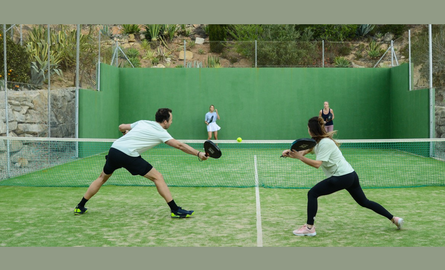
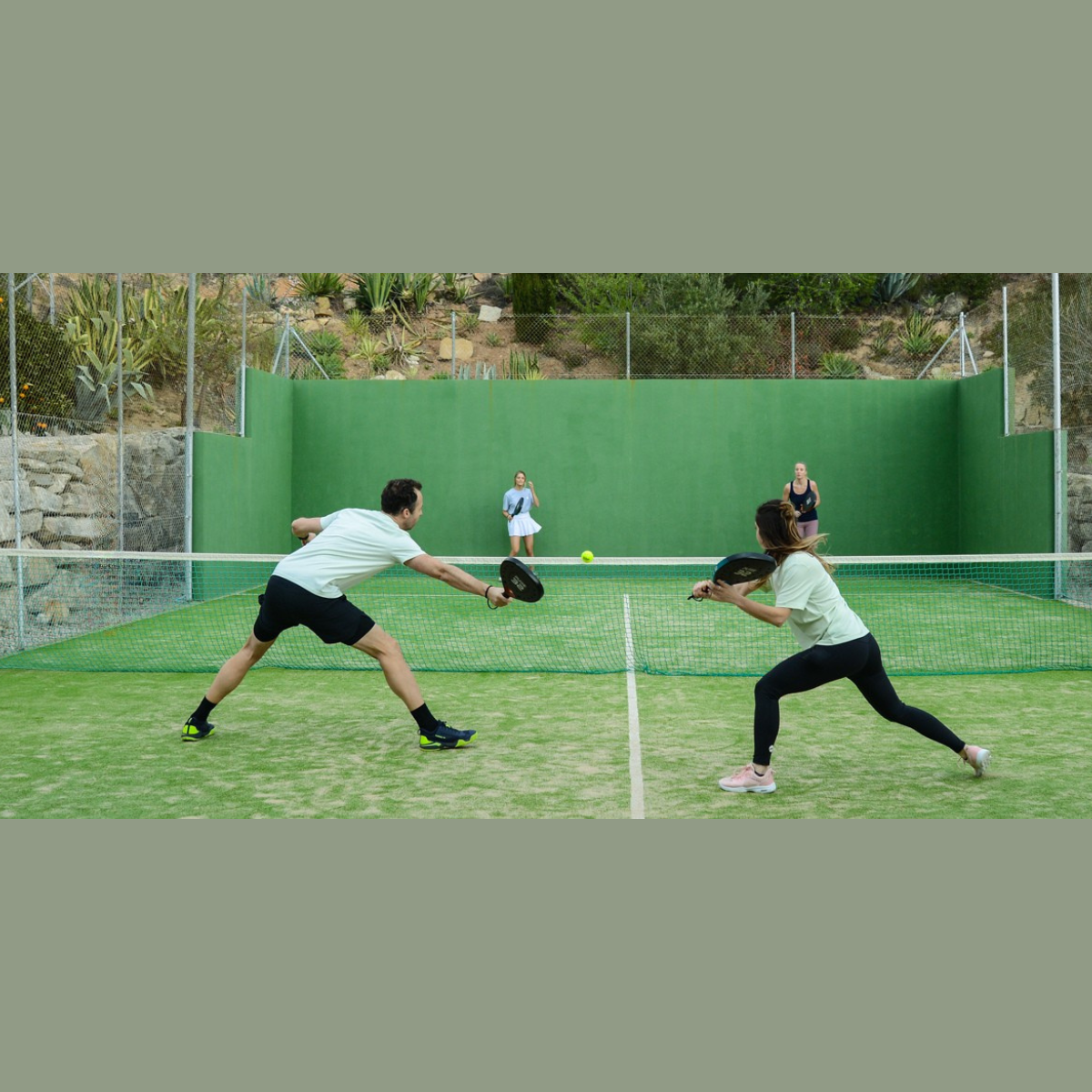
The game is typically played in doubles (2 vs. 2) on a compact court surrounded by glass walls that are actively part of the game. There are single courts as well, great for practice, but true padel is played in doubles.
The ball may bounce off the glass after hitting the ground, allowing longer rallies and more strategic play.
Padel requires a balance of power, precision, and teamwork — the key to success lies in smart positioning and good communication with your partner. It’s not about hitting hard but about minimizing errors.
What makes padel so popular is its accessibility.
Whether you’re a seasoned athlete or a total beginner, you’ll be rallying within minutes — and after one match, you’ll understand why padel is taking over the world.
Where Did Padel Come From?
Padel originated in Mexico in the 1960s.
Mexican businessman Enrique Corcuera built a small tennis court at his home in Acapulco in 1969, surrounded by walls.
Due to limited space, he incorporated the walls into the game — and padel was born.
The concept soon spread to Spain and Argentina, where the sport exploded in popularity.
Today, padel is the second most popular sport in Spain (after football), and the Spanish influence remains visible in the terminology, playing style, and culture of the sport.
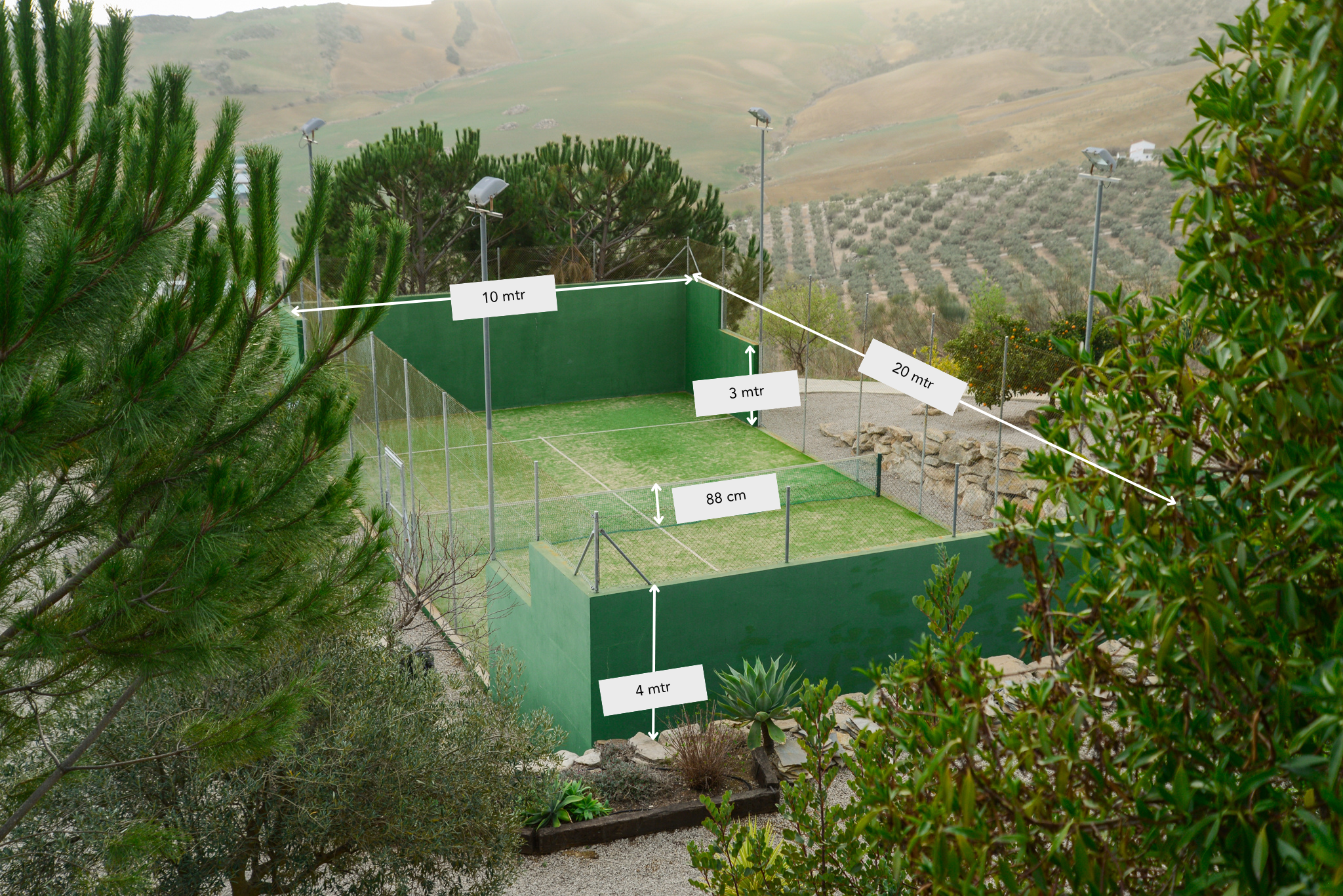
Padel Court Dimensions and Features
An officialpadel court measures 20 meters long and 10 meters wide.
The field is divided by a net 88 cm high at the center.
The court is fully enclosed by glass walls and metal fencing, creating padel’s unique dynamic.
The back walls are 4 meters high, while the side walls taper from 4 to 3 meters.
Older Spanish courts may still feature concrete instead of glass walls.
This setup allows the ball to bounce off the glass and fencing during play, creating unpredictable trajectories — one of the many reasons padel stands apart from any other racket sport.
The Rules of Padel in Short
Padel scoring is similar to tennis, but the gameplay feels different.
Game format: Doubles (2 vs. 2). Singles exist mainly for training or practice.
Scoring: 15–30–40–game (like tennis). Sets go to 6–6 and are decided with a tiebreak. Matches are best of 3 sets.
Service: Underhand, diagonal, after one bounce behind the service line, and below hip height. You get two serves.
Bounce rule: The ball may bounce once before being returned. After bouncing, it can hit the glass (but not the fence) on your side before you hit it back.
Bonus: The Spanish Toss
Padel adds a social twist to the coin toss. After the warm-up, players decide who starts by playing a rally — every player must hit the ball once. The pair who wins that rally starts the match.
Essential Spanish Padel Shots
Padel isn’t just a sport — it’s also a language.
Here are the core terms you’ll hear on court:
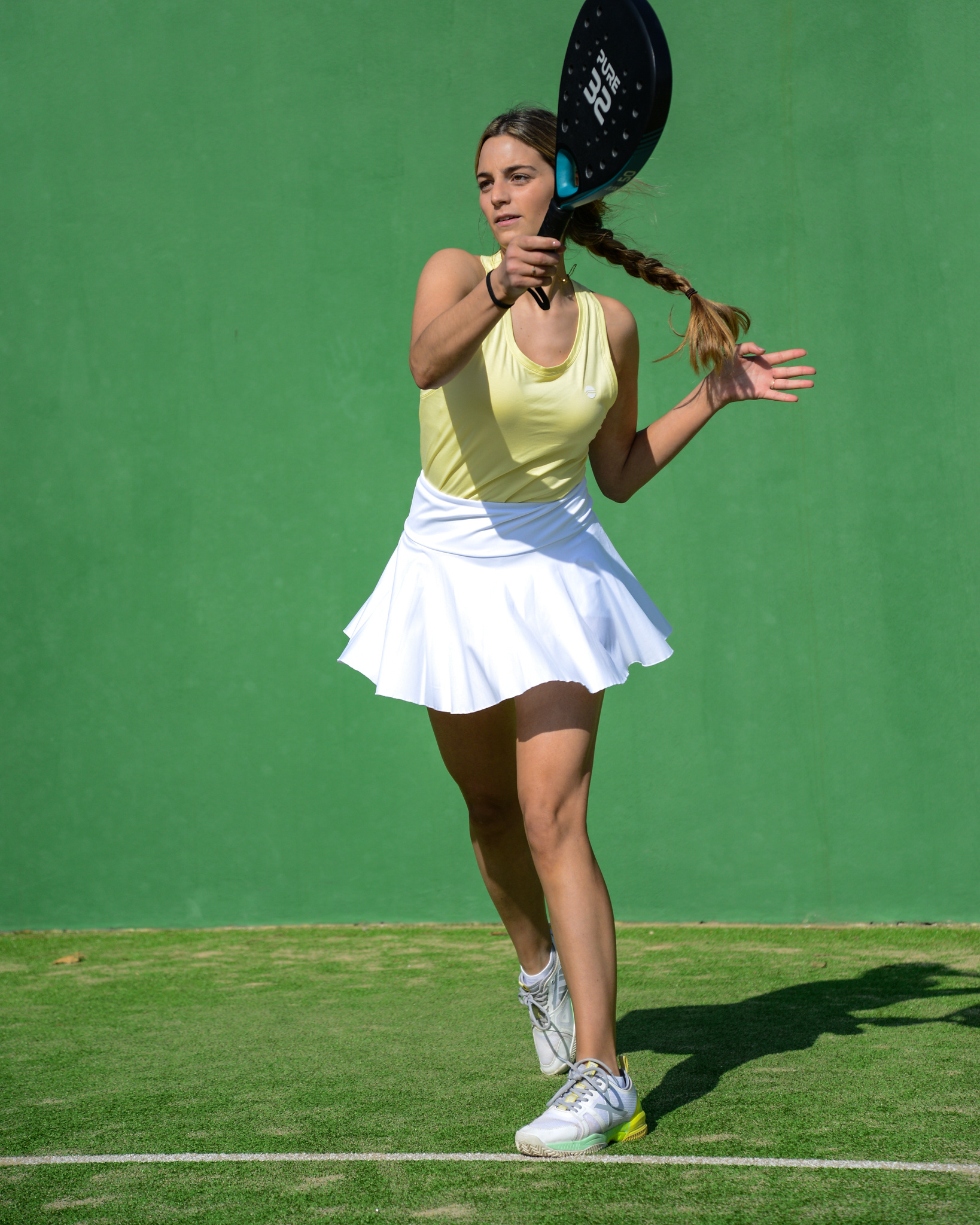
Derecha – Forehand
The stroke played on the right-hand side of your body (for right-handed players).
A fundamental shot that you should master quickly — you’ll need it frequently during every rally.
Revés – Backhand
The stroke played on the left-hand side of your body (for right-handed players).
Many padel players find this shot more challenging than the forehand.
It can also be played with two hands for better control and stability.
Saque – Serve
The serve that starts every point.
It’s played underhand, after one bounce of the ball behind the service line, and must land diagonally in the opposite service box.
The contact point must always be below hip height.
Volea – Volley
A shot hit before the ball touches the ground.
Essential at the net and often decisive when attacking.
Remate – Smash
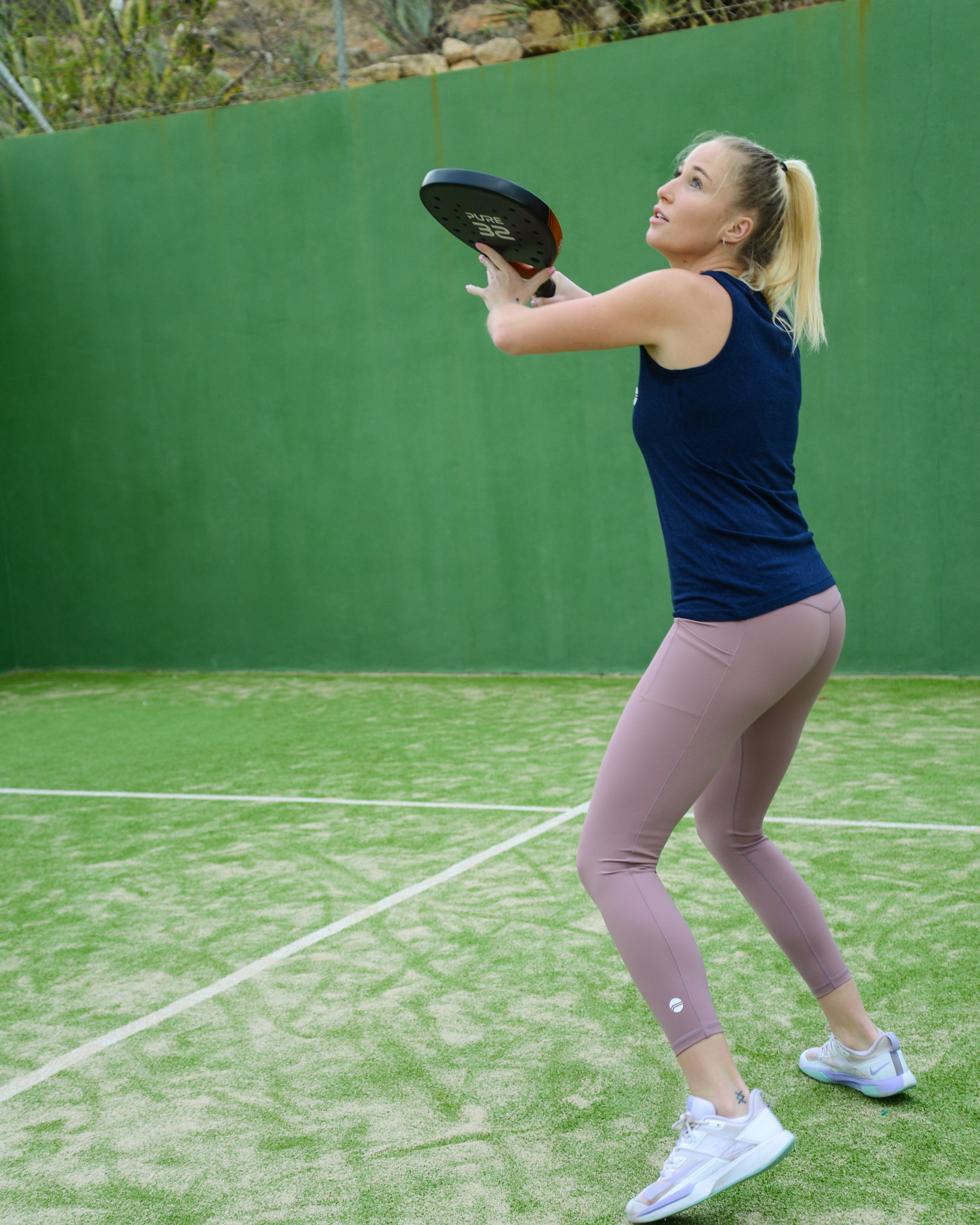
A powerful overhead shot used to finish the point with authority.
Globo – Lob
A high defensive shot that gives you time to recover your position on the court.
Advanced Padel Shots (Become a Connoisseur)
Bandeja – literally “tray”
A controlled high volley used to maintain or regain your position at the net. Ideally, the ball stays low when it bounces back from the opponent’s back wall.
Víbora – “the snake”
A faster, slicing version of the bandeja with extra spin and speed. This shot often produces a direct winner.
Gancho – “hook shot”
An overhead shot with sidespin, typically used against high lobs. It helps you keep control of the net position and is difficult for opponents to return.
Chiquita – “little ball”
A soft, low shot that just clears the net to apply pressure and create space. Often played toward the opponent’s feet, giving you time to move forward and take the net.
Dejada – drop shot
A delicate, precise shot that drops just over the net, designed to catch opponents off guard when they’re standing too far back.
Usually played with light backspin so the ball barely bounces.
Salida de pared – “wall return”
A defensive shot played when the ball first hits your back wall and then comes back toward you.
Instead of hitting the ball before it reaches the wall, you let it bounce off the glass intentionally — giving you time to control the return and direct it back toward your opponents.
Bajada de pared – “attack after the wall”
An attacking shot played after the ball bounces off your back wall and comes back toward you — often simply called the Bajada.
Unlike the defensive salida de pared, this shot uses the energy of the rebound to strike back with power and precision.
Extra Terms
Remate por tres – Smash over three
A powerful smash where the ball, after bouncing on the court, flies out over the 3-metre side wall.
This can happen either with a heavily sliced smash that first hits the back wall before exiting via the side, or directly after the bounce.
It’s executed with a strong wrist snap to generate maximum side spin and height.
Remate por cuatro – Smash over four
A hard, explosive smash that sends the ball completely out of the court over the 4-metre back wall after the bounce.
Bloqueo – Block
A short, stable defensive shot used to absorb and neutralise powerful balls — most often played at the net.
Contrapared ofensiva – Offensive wall shot
A deliberately played shot off your own back wall to change the pace or direction of the rally and immediately counterattack.
Contrapared defensiva – Defensive wall shot
A controlled shot off the back wall, typically used when you’re out of position and need to recover or keep the ball in play as a last resort.
Salida de doble pared – Double wall return
A shot that uses both the side wall and back wall to return the ball.
When executed well, this move can completely shift the momentum of the rally — opponents often expect an error from the corner but are surprised by a sharp, precise return right at their feet.
Liftado – Topspin shot
The liftado (from the Spanish levantar, “to lift”) is padel’s version of the topspin shot — a smooth upward swing that makes the ball spin forward and rise.
This makes it harder for opponents to volley effectively, though it can rebound higher off the back wall, giving them an easier return if overused.
Cortado – Slice shot
The cortado (from cortar, “to cut”) is the opposite of the liftado.
It’s a slice shot hit with a downward, cutting motion that produces backspin, keeping the ball low after the bounce and making it tricky for opponents to lift back over the net.
Why Is Padel Growing So Fast?
At every padel event — whether business or leisure — this question always comes up.
It’s simple: padel is social, accessible, and seriously addictive.
You don’t need years of experience or elite fitness to enjoy it.
Within minutes, you’re rallying; within half an hour, you’re laughing — and soon, you’re playing every week.
Padel perfectly balances simplicity and challenge. It’s easy to start, but endlessly hard to master — keeping every player engaged, from first-timers to pros.
Also read our blog: Why More Athletes Are Switching to Padel
Padel Is More Than a Sport
At Pure32 Padel, we believe padel is more than a game.
It’s a community— a place where design, passion and performance meet, both on and off the court.
Whether you’re playing to win, to stay active, or simply for the joy of connection, padel gives everyone a reason to play.
So grab your racket, step into the glass court, and play with purpose — and with a smile.